Custom Typeface
Custom typeface projects vary widely in scope. Here are the main factors that shape the scope, timeline, and cost.
Scope Variables
① Deliverable type
② Typeface style
➂ Art Direction
④ Character coverage
⑤ Weights & styles
⑥ Rights & exclusivity
① Deliverable type
The deliverable defines the production scope: outlined letterforms and installable fonts require very different levels of work.
Vector letterforms
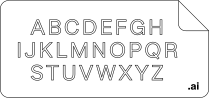
Outlined letters in AI, SVG, or PDF. Used as artwork in design software, but not installable or typed out.
Working font (installable)
An OTF or WOFF2 font that can be installed and typed, with spacing, kerning, and testing included.


② Typeface style
Style affects complexity. A straightforward sans-serif is usually the most efficient to develop, while serif, script, and expressive display styles require more drawing, spacing, and refinement.
Sans-serif

Serif

Script/Display

➂ Art Direction
Clear art direction helps us draw and refine the typeface faster. If the visual direction is still open, we begin with research, references, sketches, and concept options.
Clear direction exists
A logo, style guide, reference, or
defined visual brief is already in place.
Needs exploration
We begin with research, references, sketches,
and concept options.
Copyright note: If your logo or reference is based on a commercially licensed typeface, we cannot simply trace those letterforms into a new font.
④ Character coverage
Glyph count directly affects timeline and cost. A project may begin with just the letters, then expand to include accents, symbols, small caps, or OpenType features. Each addition requires drawing, spacing, and testing.
Minimal alphabet
For names, titles, or short phrases. Not for paragraph text.
Basic Latin
A–Z, a–z, 0-9, and basic punctuation. Suitable for typing new headlines, names, and short brand text.
Latin Extended
Covers Basic Latin plus extended Latin characters for a wide range of European Latin-script languages
Extended languages
or OpenType features
Additional language support such as Vietnamese, plus features such as ligatures, alternates, small caps, tabular figures, fractions, and more.
⑤ Weights & styles
Each weight or style adds drawing, spacing, kerning, testing, and production work, even when the styles are part of the same system.
Single weight
The most common start for brand and display typefaces.

Two weights
Creates a simple typographic hierarchy, such as Regular and Bold.

Family: 3 to 8 weights
broader type system for more flexible brand use.

+ Italic
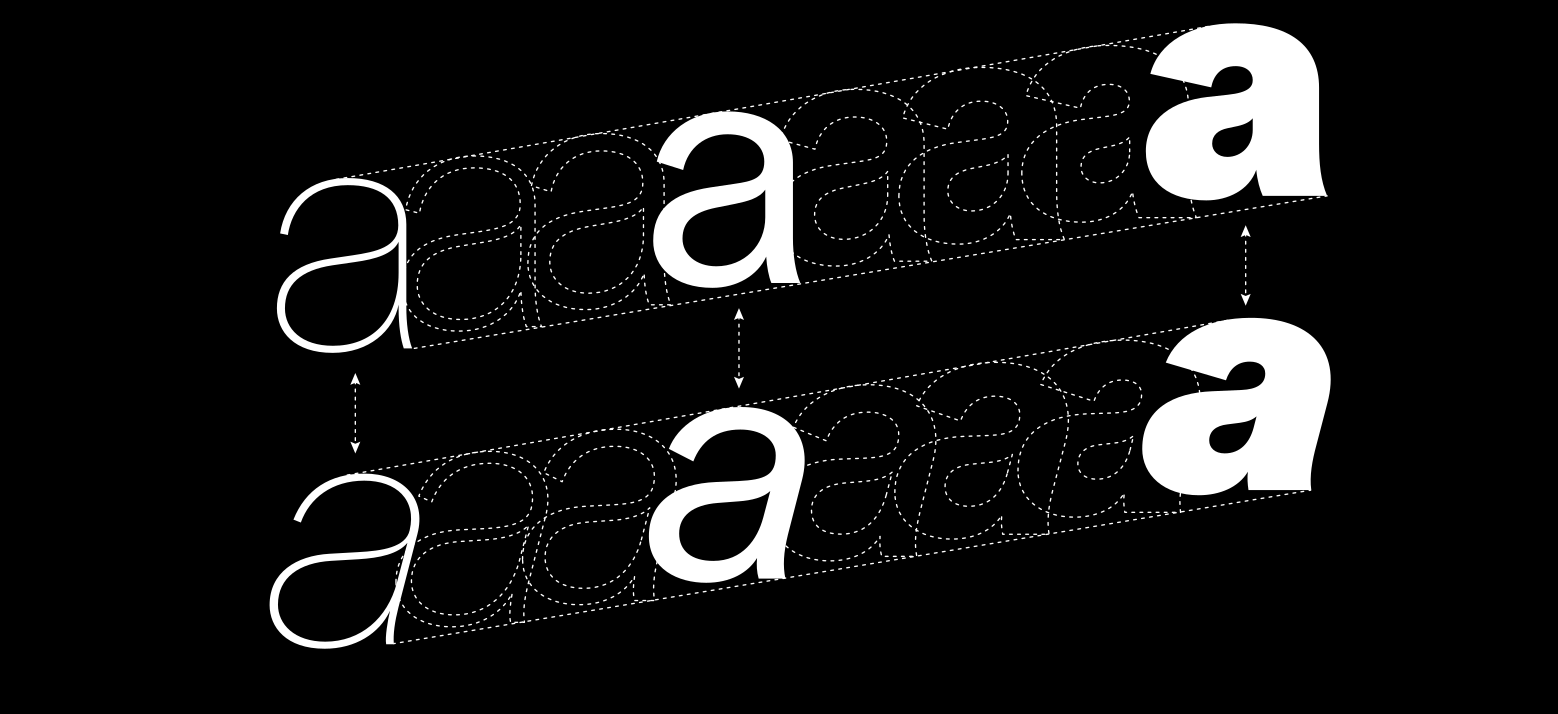
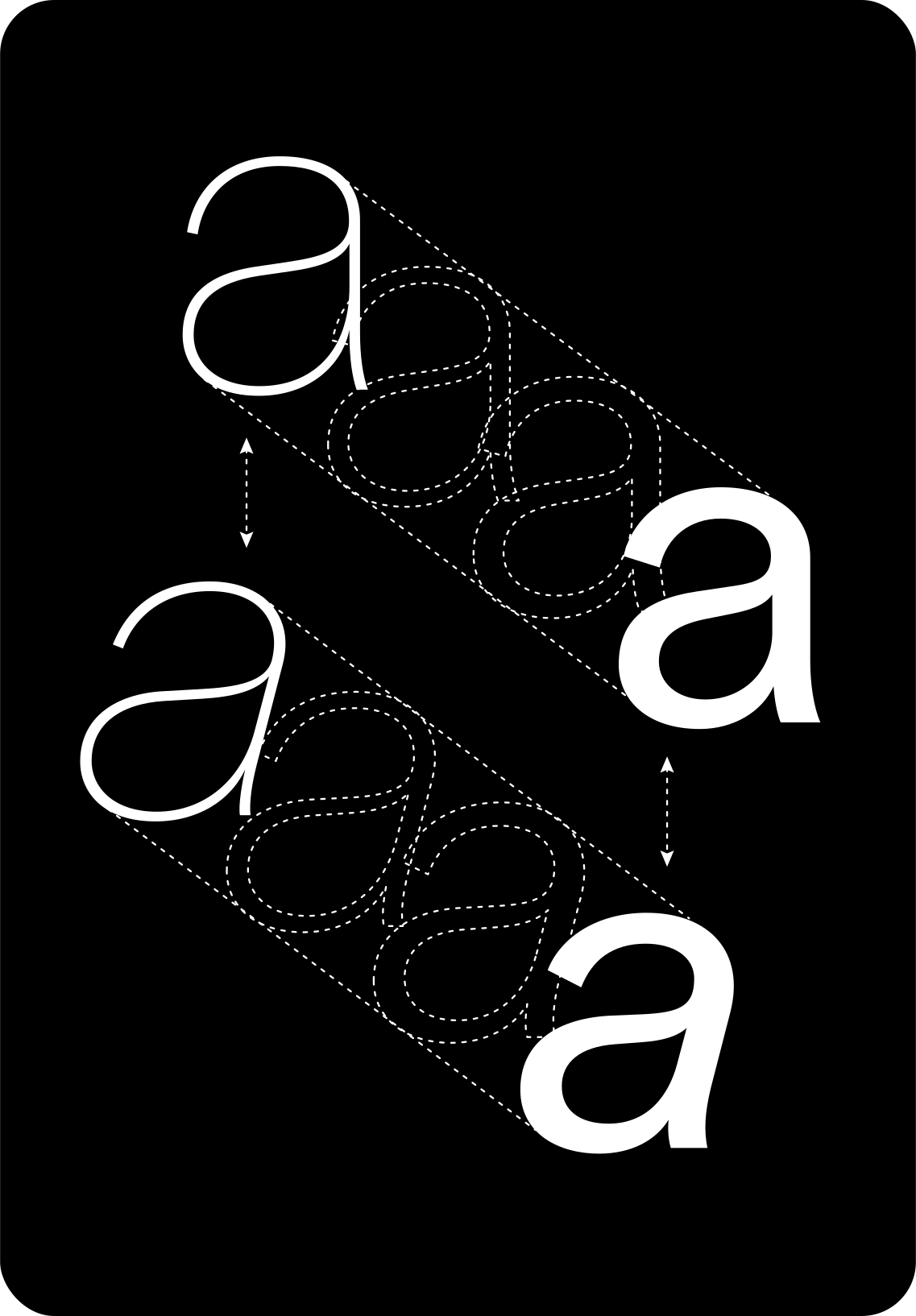
A genuine italic requires a separate design process, not simply slanting.

+ Condensed or Extended
A new width requires more than stretching.

⑥ Rights & exclusivity
A custom typeface can be licensed for a specific use, brand, or period of time. Broader exclusivity, perpetual rights, or full IP transfer usually increases the project cost.
Non-exclusive license
You may use the typeface for the agreed scope, while Typeji may reuse, adapt, or license related work elsewhere.
Perpetual usage +
Limited exclusivity
You may use the typeface indefinitely. A defined exclusive-use period can be included in the scope.
Perpetual exclusivity
Exclusive use continues without a fixed end date.
Full IP & Copyright transfer
The client receives ownership of the final custom typeface, as defined in the agreement.
Common starting points
Limited Alphabet
For product names, campaign headlines, or a defined set of brand wording. Usually vector letterforms or a small working font.
Headline Brand Font
For typeseting headlines, names, or short brand text. Usually Basic Latin, one or two weights.
Complete Type Family
For broader brand use across languages, weights, and media. Usually Latin Extended, multiple weights, and more testing.
→ Get started
Tell us a little about the project. A short email is enough to begin. If you’re considering more than one direction, feel free to include them all—we can quote separate options. → Get in touch
%20--%3e%3cdefs%3e%3cstyle%3e%20.st0%20{%20fill:%20%23fff;%20}%20%3c/style%3e%3c/defs%3e%3cg%20id='Layer_1'%3e%3cpath%20class='st0'%20d='M84.685,28.43c0-2.56,1.55-4.45,4.31-4.45s4.38,1.89,4.38,4.45-1.62,4.45-4.38,4.45-4.31-1.95-4.31-4.45ZM123.695,26.68v-.94c0-2.36,1.55-3.77,3.5-3.77,1.62,0,3.44,1.15,3.44,3.3,0,.4,0,1.01-.07,1.41,0,0-6.87,0-6.87,0ZM181.915,45.34V10.98h-16.04v34.36h16.04ZM59.085,55.04l9.57-41.64h.27v41.64h16.1v-15.97c1.55,4.18,5.12,6.81,10.51,6.87,6.67-.13,12.4-4.78,13.75-13.68,1.75,9.3,9.7,13.88,19.27,13.88,4.11,0,8.56-.4,11.72-1.55v9.7c1.68.47,5.93,1.01,7.88,1.01,9.9,0,14.28-5.26,14.28-13.48V10.98h-16.1v27.83c0,2.02-1.15,2.96-2.83,2.96-.67,0-1.55-.07-2.02-.2v-9.3c-3.17,1.01-6.81,1.55-10.24,1.55-5.12,0-7.34-1.55-7.75-4.04h19.61c.27-1.35.27-3.17.27-4.38,0-9.97-7.28-15.16-16.31-15.3-9.7-.13-16.17,6.13-17.72,14.01-1.35-9.03-7.14-13.75-13.81-13.75-6.27,0-10.51,3.91-12.06,9.9l-2.02-9.3h-28.3l-3.03,20.69h-.81l-3.03-20.69h-9.97V2.76H-.015v14.08h9.9v28.5h16.78v-28.5h4.38l5.46,28.5h9.37l-2.83,9.7s16.04,0,16.04,0ZM182.315,4.38c0-2.43-1.82-4.38-4.58-4.38s-4.65,1.95-4.65,4.38,1.75,4.38,4.65,4.38,4.58-1.95,4.58-4.38ZM162.775,4.38c0-2.43-1.82-4.38-4.51-4.38-2.9,0-4.72,1.95-4.72,4.38s1.82,4.38,4.72,4.38c2.7,0,4.51-1.95,4.51-4.38Z'/%3e%3c/g%3e%3c/svg%3e)