Kanji/Hanzi Prototype
Two paths for working with Kanji/Hanzi: ① Licensing characters from an existing prototype, or ➁ Commissioning a Japanese or Chinese version of your wordmark.
① License the Prototype
About
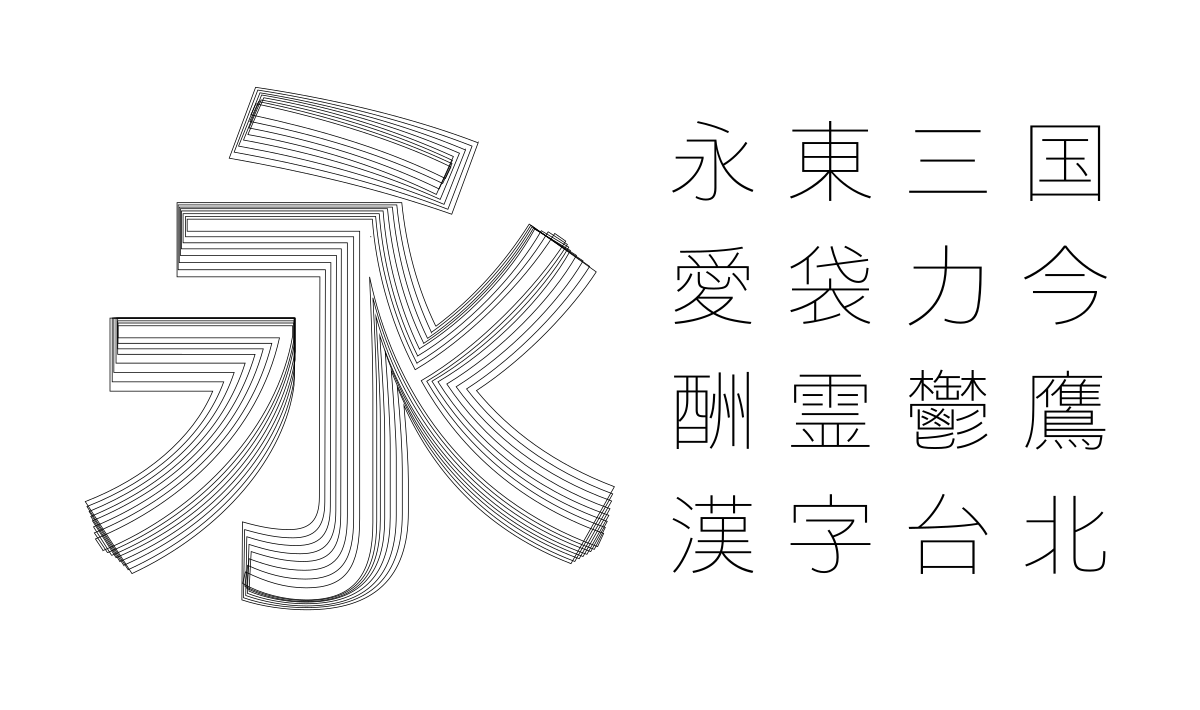
Each typeface in our library is developed alongside a Kanji and Hanzi prototype — a limited but carefully resolved character set drawn in structural and visual alignment with the corresponding Latin design.
The term prototype refers to the scope of the character set, not its level of refinement. Each character is drawn with the same attention to stroke behavior, proportion, contrast, and spatial logic as the Latin typeface it accompanies.
A preview of the Kanji/Hanzi prototype is available on each typeface’s specimen page.
Kanji & Hanzi Distinctions
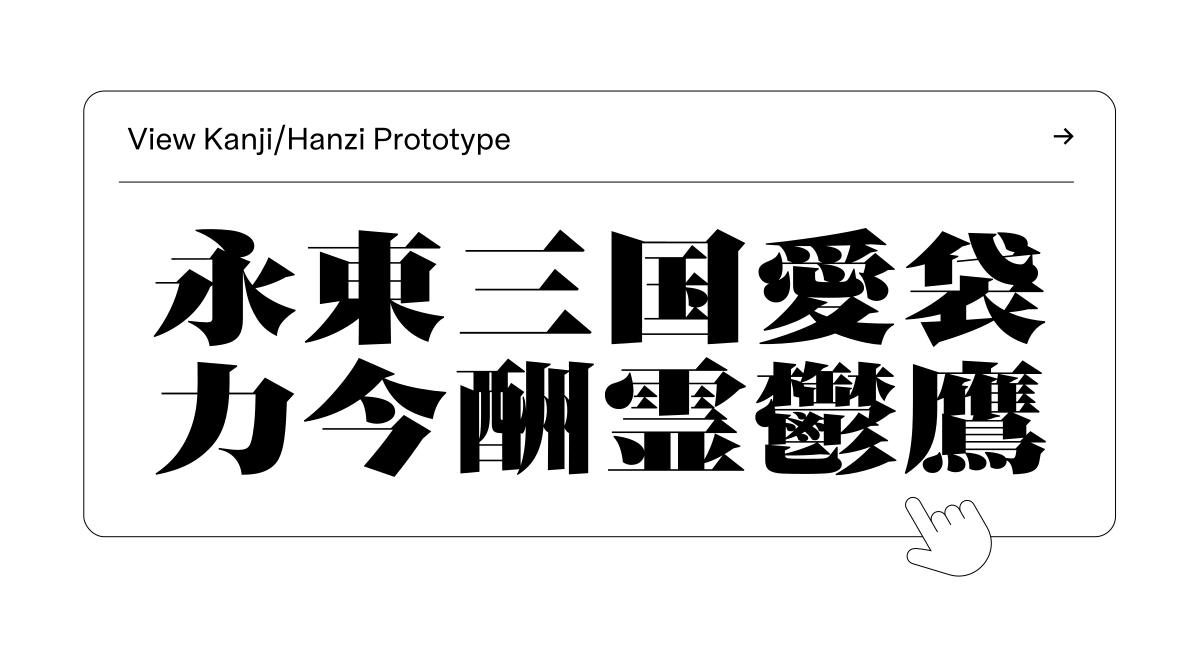
Although Kanji and Hanzi share a large portion of their character repertoire and historical structure, many characters differ in certain forms.
Within the prototype, shared characters are drawn from a common structural basis, while localized forms are introduced where conventional usage differs between Japanese and Chinese contexts.
These distinctions may include differences in stroke count, component structure, or formal emphasis. Localization decisions are treated as integral design choices rather than stylistic variations.
Scope & Approach
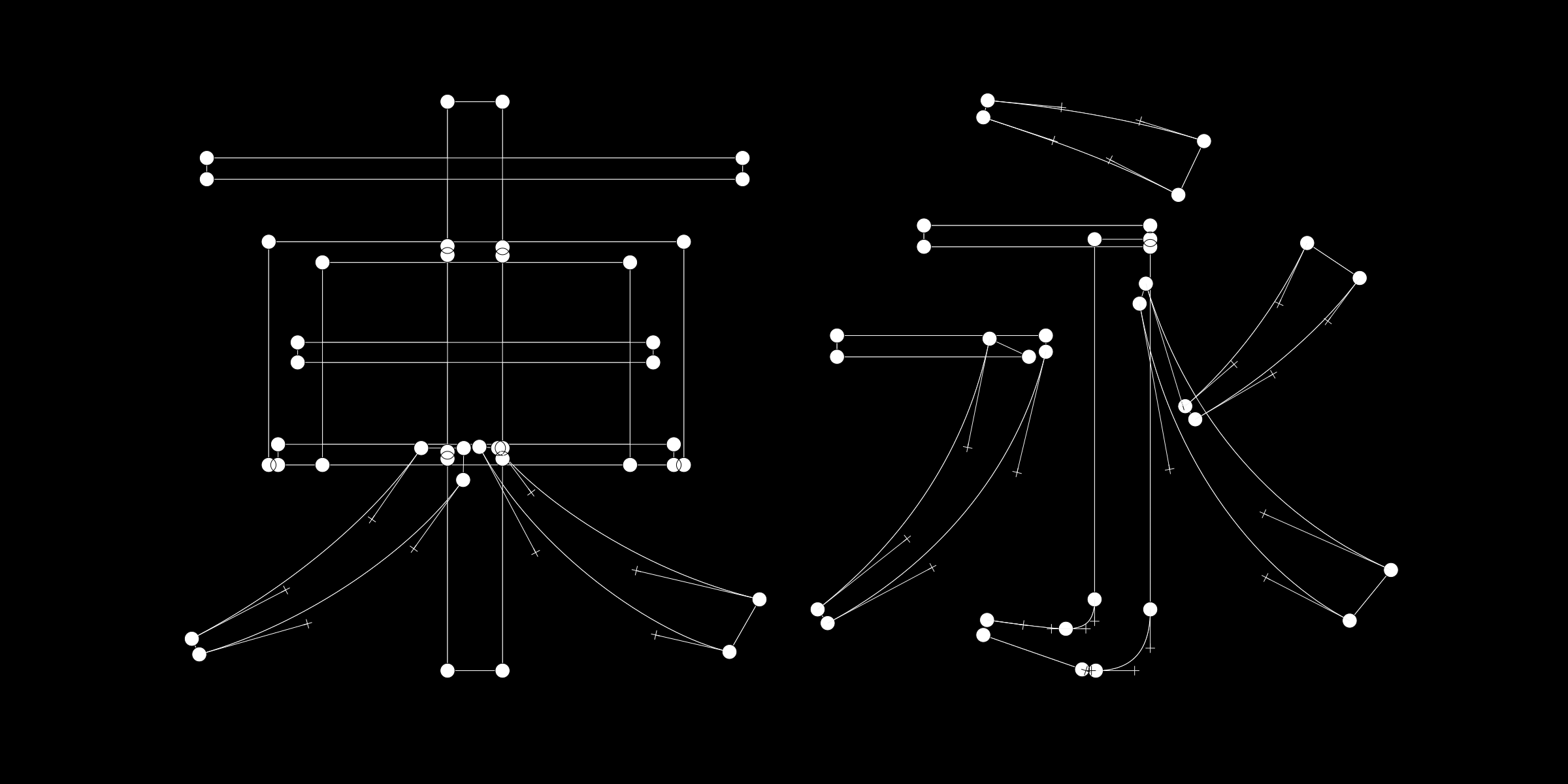
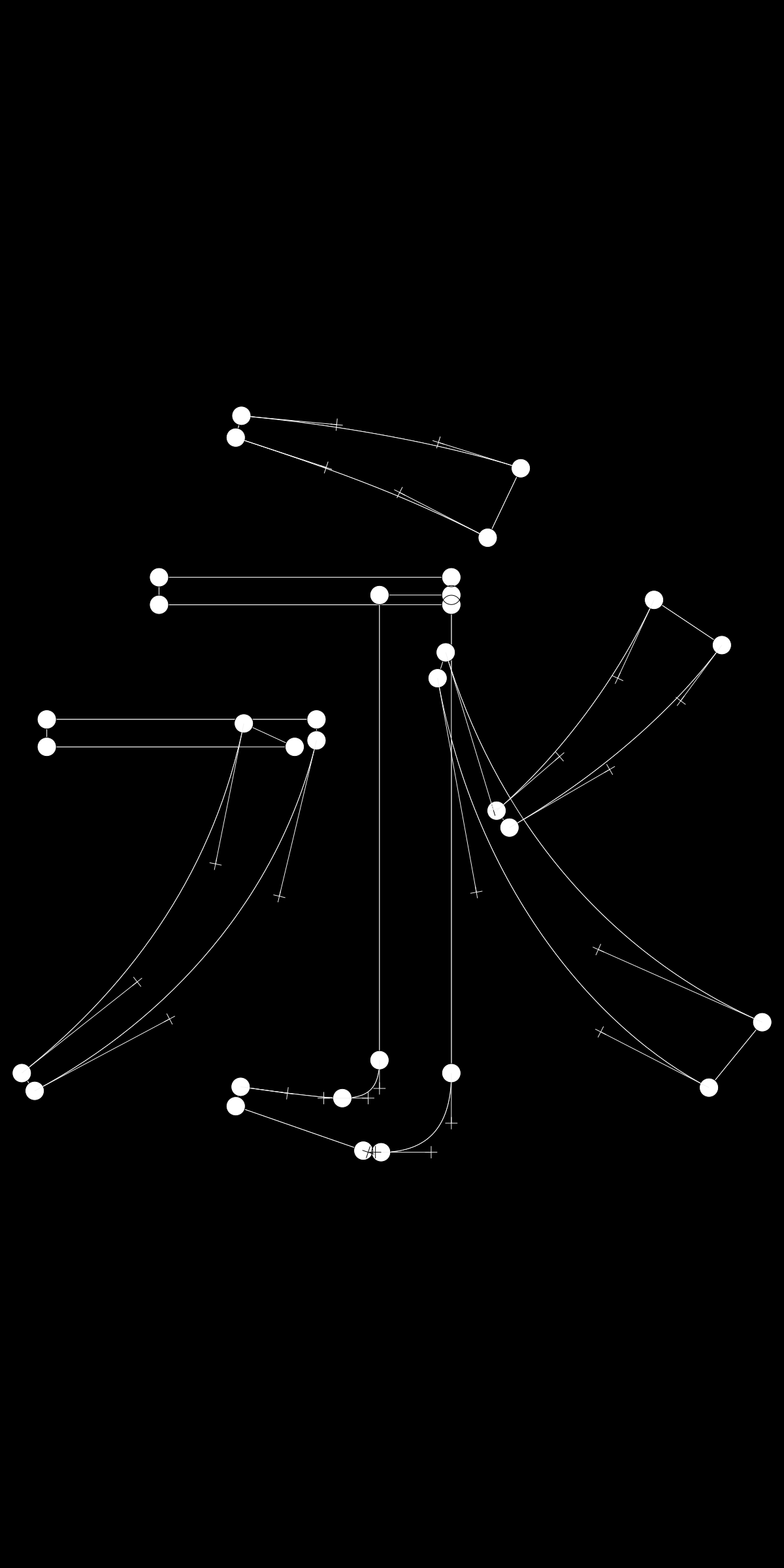
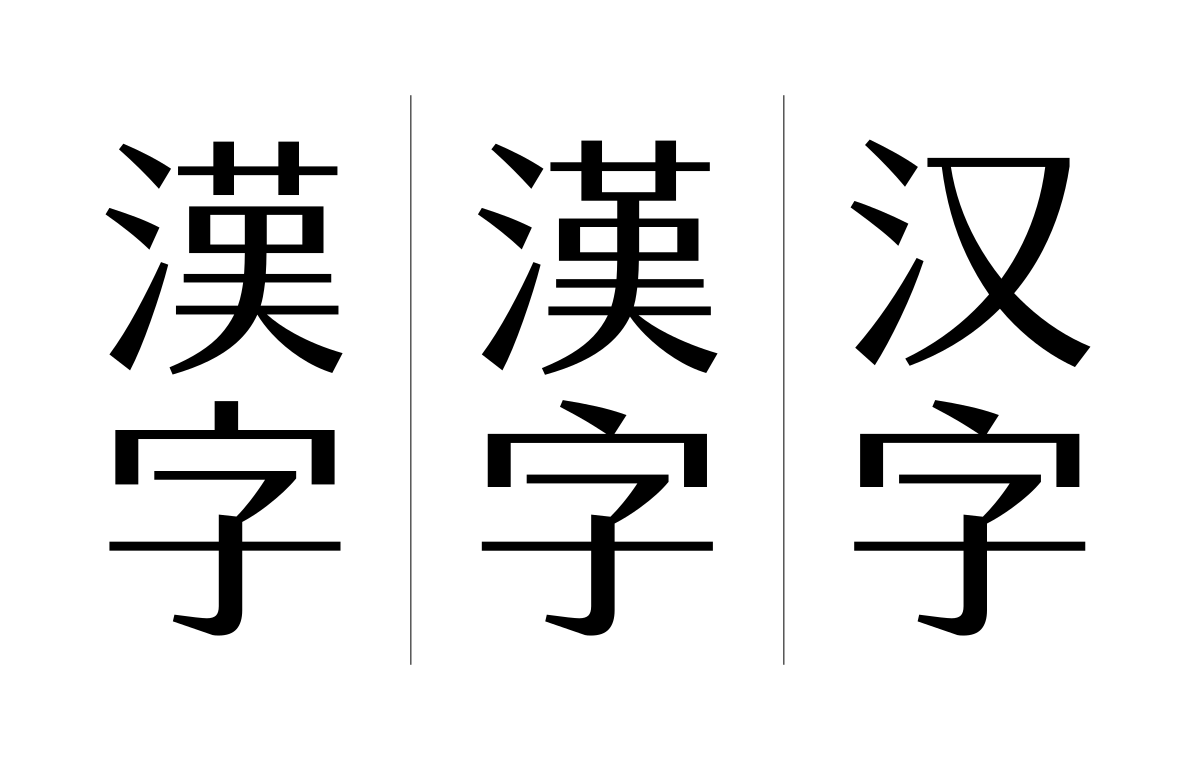
The prototype begins with a core group of foundational characters traditionally drawn at the earliest stage of Kanji and Hanzi type development — characters like 東, 国, 愛, 永, 袋, 三, 力, 今, 酬, 鷹, 霊, 鬱. These define structural rules, stroke relationships, and spatial frameworks.
Supplementary characters may be added to support basic layout and typesetting evaluation. The selection is sufficient to define a coherent system, without extending toward full script coverage.
Licensing
The prototype may be licensed for project-specific use: logotypes, titles, and short typographic phrases. It is not intended for continuous text or extended content. *The Kanji and Hanzi characters are not included in any Latin retail font files.
Character availability varies by typeface. Contact us with your required characters and the typeface you have in mind, and we will confirm whether they fall within the existing prototype.
The Hanzi/Kanji are licensed as-is. If you want to adjust weight, contrast, or expand the character set beyond the prototype, we can help — that is treated as a separate custom project with its own fee.

② Wordmark Localization
About
For brand teams and design agencies working on market entry or expansion into Taiwan, China, or Japan, we design Kanji and Hanzi versions of existing wordmarks.
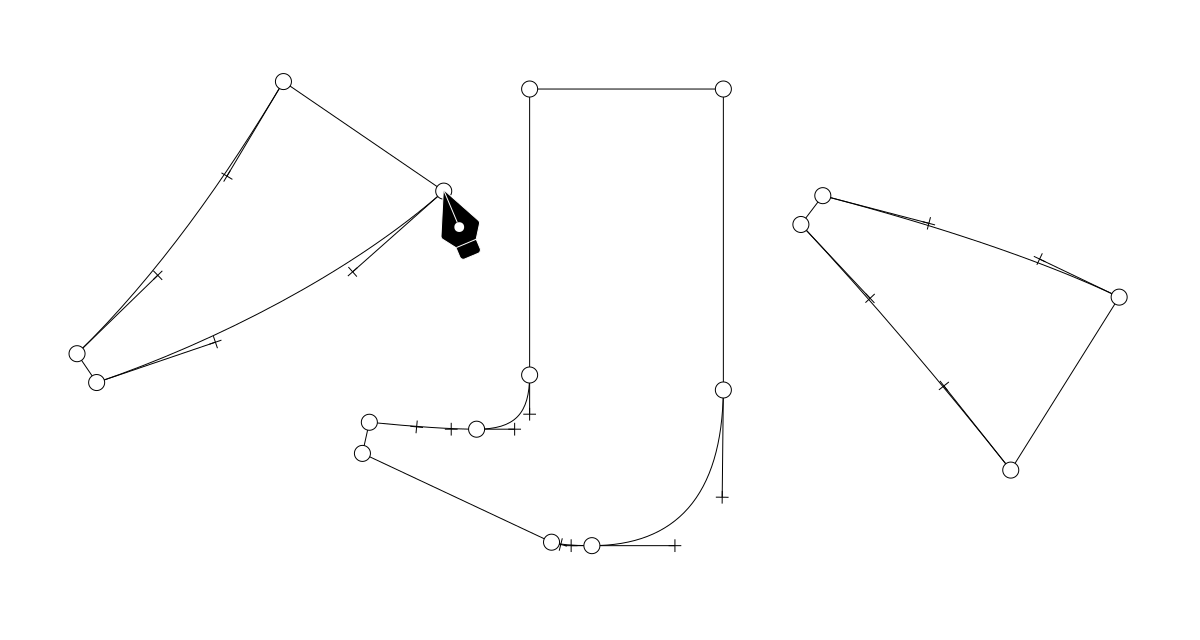
If your brand identity is set in Latin or another script, we develop a Kanji or Hanzi counterpart that maintains the same visual logic: stroke modulation, weight, spacing, and overall personality. The result is a wordmark that reads as native to its script while remaining unmistakably part of the same brand family.
This work is developed independently from the existing prototypes and is scoped entirely around your wordmark and market requirements.
Requirements
Please provide a clear logo file or vector artwork in PDF, SVG, AI, or EPS format, and specify the target market, such as Japan (Japanese/Kanji), Taiwan (Traditional Chinese/Hanzi), Hong Kong (Traditional Chinese/Hanzi), or China (Simplified Chinese/Hanzi). Also include any specific requirements, such as whether the logo needs to remain clear at small sizes or match a particular style guide.
Timeline & Cost
Typical projects take 2–4 weeks, depending on complexity, character count, and feedback rounds. If your timeline is tight, we may be able to deliver an initial draft within one week. We will provide a detailed estimate after reviewing your wordmark and project requirements.
→ Contact us with your projectKanji/Hanzi FAQ
Is the Kanji/Hanzi prototype included in the font?
No, it’s not included. But if you want to create a logo, show titles, or game titles using the prototype style, you can license a small character set. Feel free to email us with your request.
Why are they called prototypes?
They’re called prototypes because they include a very limited set of characters and mainly showcase the style. They’re not meant for daily use, which would require thousands of characters.
How much does it cost to commission a Chinese/Japanese logo in the prototype style?
It depends on usage, timeframe, design requirements, and project complexity. Feel free to get in touch.
What is CJK type?
CJK refers to Chinese, Japanese, and Korean type. Here are some great articles about it from Google Knowledge.
Can I see examples of past work?
Yes, please contact us for the portfolio.
What if I need a full Kanji/Hanzi typeface?
We don't design complete CJK typefaces — that requires a much larger team and a multi-year timeline.
%20--%3e%3cdefs%3e%3cstyle%3e%20.st0%20{%20fill:%20%23fff;%20}%20%3c/style%3e%3c/defs%3e%3cg%20id='Layer_1'%3e%3cpath%20class='st0'%20d='M84.685,28.43c0-2.56,1.55-4.45,4.31-4.45s4.38,1.89,4.38,4.45-1.62,4.45-4.38,4.45-4.31-1.95-4.31-4.45ZM123.695,26.68v-.94c0-2.36,1.55-3.77,3.5-3.77,1.62,0,3.44,1.15,3.44,3.3,0,.4,0,1.01-.07,1.41,0,0-6.87,0-6.87,0ZM181.915,45.34V10.98h-16.04v34.36h16.04ZM59.085,55.04l9.57-41.64h.27v41.64h16.1v-15.97c1.55,4.18,5.12,6.81,10.51,6.87,6.67-.13,12.4-4.78,13.75-13.68,1.75,9.3,9.7,13.88,19.27,13.88,4.11,0,8.56-.4,11.72-1.55v9.7c1.68.47,5.93,1.01,7.88,1.01,9.9,0,14.28-5.26,14.28-13.48V10.98h-16.1v27.83c0,2.02-1.15,2.96-2.83,2.96-.67,0-1.55-.07-2.02-.2v-9.3c-3.17,1.01-6.81,1.55-10.24,1.55-5.12,0-7.34-1.55-7.75-4.04h19.61c.27-1.35.27-3.17.27-4.38,0-9.97-7.28-15.16-16.31-15.3-9.7-.13-16.17,6.13-17.72,14.01-1.35-9.03-7.14-13.75-13.81-13.75-6.27,0-10.51,3.91-12.06,9.9l-2.02-9.3h-28.3l-3.03,20.69h-.81l-3.03-20.69h-9.97V2.76H-.015v14.08h9.9v28.5h16.78v-28.5h4.38l5.46,28.5h9.37l-2.83,9.7s16.04,0,16.04,0ZM182.315,4.38c0-2.43-1.82-4.38-4.58-4.38s-4.65,1.95-4.65,4.38,1.75,4.38,4.65,4.38,4.58-1.95,4.58-4.38ZM162.775,4.38c0-2.43-1.82-4.38-4.51-4.38-2.9,0-4.72,1.95-4.72,4.38s1.82,4.38,4.72,4.38c2.7,0,4.51-1.95,4.51-4.38Z'/%3e%3c/g%3e%3c/svg%3e)